 ISO Certification
ISO 9001:2015 Quality Management System (QMS) Certification
Optimize operational efficiency, satisfy customers, and drive continuous improvement through the world's leading quality management standard.
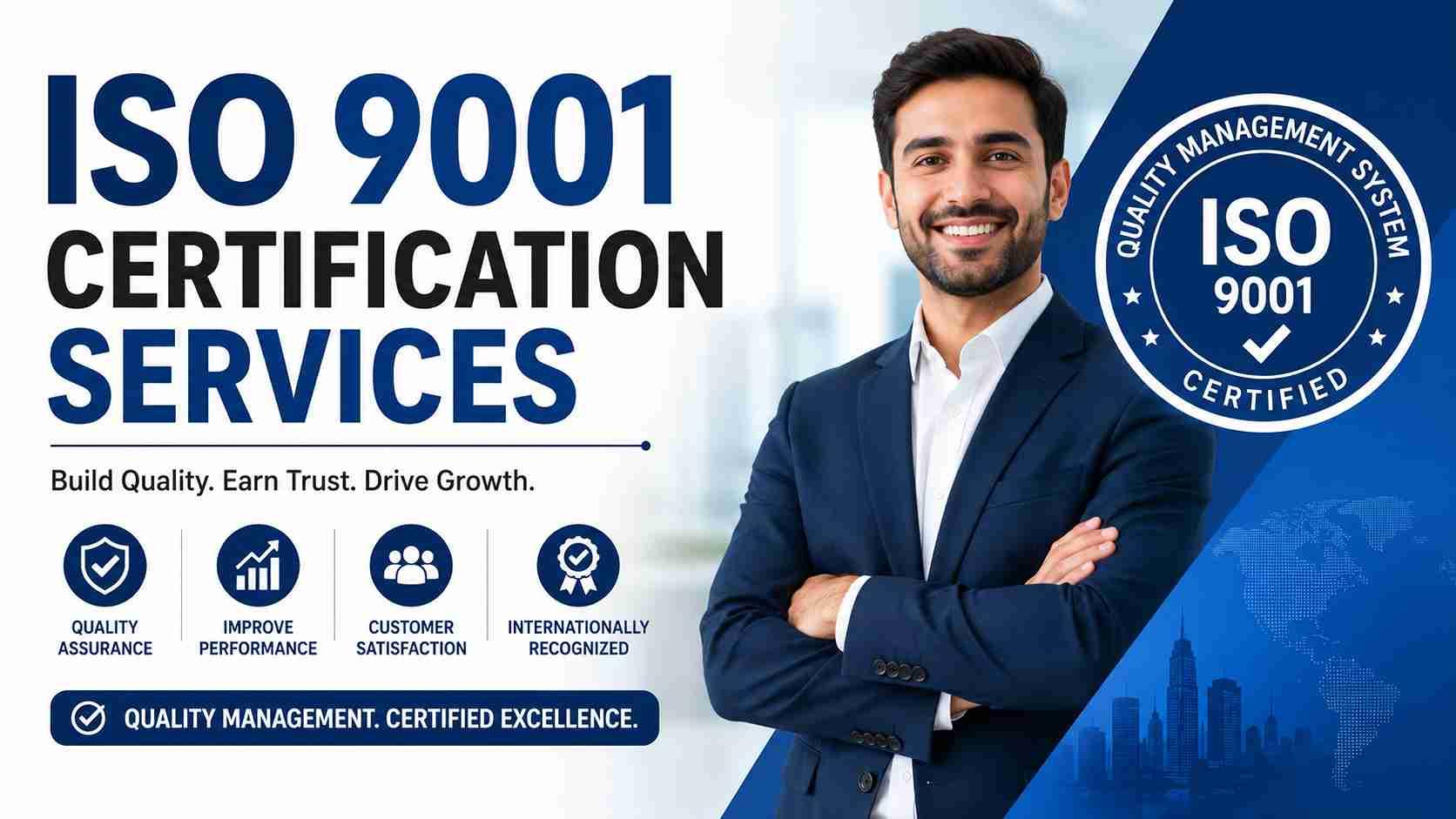
ISO 9001 Certification Services
MSR Assessment provides ISO 9001 certification support for organisations seeking to establish, implement and improve a Quality Management System.
Our support can include:
If your organisation is considering other standards as well, you can explore our ISO certification services to understand the broader range of management-system certification options.
ISO 9001 Certification in Kolkata
MSR Assessment provides ISO 9001 certification support for businesses in Kolkata and across India.
Our approach can be tailored to the organisation's size, industry, processes and certification scope. We help organisations understand ISO 9001 requirements, review their existing processes, identify gaps, prepare relevant documentation and records, and get ready for the applicable assessment stages.
Whether you are a startup, small business, manufacturer, service provider or established organisation, the Quality Management System should be appropriate to your actual business activities and defined certification scope.
What Is ISO 9001 Certification?
ISO 9001 certification is an independent assessment of an organisation's Quality Management System against the requirements of ISO 9001.
ISO 9001 provides a framework that helps organisations consistently manage their processes and meet customer and applicable requirements while supporting continual improvement.
Certification does not prescribe one specific way of running a business. Instead, the Quality Management System should be appropriate to the organisation's activities, processes, products, services, risks and defined certification scope.
What Is ISO 9001:2015?
ISO 9001:2015 is the 2015 edition of the ISO 9001 Quality Management System standard.
The standard addresses areas including:
ISO 9001:2015 also places emphasis on customer focus, risk-based thinking, process management and continual improvement.
Organisations implementing ISO 9001 should establish processes and controls that are appropriate to their actual business activities and certification scope.
ISO 9001 Quality Management System
An ISO 9001 Quality Management System provides a structured framework for managing an organisation's processes and improving their effectiveness.
A QMS can help an organisation establish:
The purpose of a QMS is not simply to create documentation for certification. The system should reflect the way the organisation actually operates and provide practical controls for managing and improving its processes.
Benefits of ISO 9001 Certification
An effectively implemented Quality Management System can provide several benefits to an organisation.
Improved Process Consistency
Clearly defined processes and responsibilities can help organisations perform their activities more consistently.
Better Customer-Focused Processes
ISO 9001 places emphasis on understanding and meeting customer requirements, helping organisations establish processes focused on customer needs.
Clearer Responsibilities and Documented Processes
A structured QMS can help define responsibilities, controls and methods for managing relevant organisational processes.
Improved Monitoring and Continual Improvement
Monitoring, measurement, internal audit, management review and corrective action can provide a structured approach to improving performance.
Stronger Business Credibility
Certification can provide evidence that an organisation's relevant Quality Management System has been assessed against the requirements of ISO 9001.
Support for Customer and Tender Requirements
Some customers, tenders and contracts may request or require an applicable quality-management certification.
ISO 9001 Requirements
The ISO 9001 requirements cover the key elements that an organisation needs to address within its Quality Management System.
Context of the Organisation
The organisation needs to understand relevant internal and external factors, interested parties and the scope of its Quality Management System.
Leadership
Top management has an important role in establishing the quality policy, responsibilities and commitment required for the QMS.
Planning
The organisation establishes quality objectives and determines appropriate actions for addressing relevant risks and opportunities.
Support
The QMS requires appropriate resources, competence, awareness, communication and documented information.
Operation
The organisation plans, implements and controls the processes necessary to provide products and services that meet applicable requirements.
Performance Evaluation
The organisation monitors and evaluates the performance and effectiveness of its Quality Management System through appropriate monitoring, measurement, analysis, internal audit and management review activities.
Improvement
The organisation identifies opportunities for improvement and takes appropriate action when nonconformities occur.
The exact implementation should be appropriate to the organisation's activities, size, processes and certification scope.
ISO 9001 Certification Process
The ISO 9001 certification process involves preparing and implementing the Quality Management System and completing the applicable certification assessment stages.
Step 1 – Understand the Organisation and Certification Scope
The organisation's activities, processes, products, services and intended certification scope are reviewed to understand how ISO 9001 requirements apply.
Step 2 – Conduct a Gap Assessment
Existing processes, documentation and records are reviewed to identify areas where improvements may be required against the applicable requirements.
Step 3 – Prepare and Implement the QMS
Relevant QMS processes, documentation, responsibilities and controls are prepared and implemented according to the organisation's activities and certification scope.
Step 4 – Conduct Internal Audit and Management Review
An internal audit is conducted to evaluate whether the QMS has been implemented effectively and whether relevant requirements are being followed.
Management reviews the QMS, relevant performance information, audit findings, risks, opportunities and areas for improvement.
Step 5 – Certification Assessment
The organisation prepares for the applicable certification assessment and provides the required evidence and records.
Step 6 – Address Corrective Actions
If findings or nonconformities are identified, the organisation takes appropriate corrective action according to the applicable certification requirements.
Step 7 – Certification Completion
The organisation completes the applicable certification requirements and continues to maintain and improve its Quality Management System.
For a broader explanation of the certification stages, see our ISO certification process page.
Documents and Records Commonly Prepared
The documents and records required depend on the organisation's activities, processes and certification scope.
Quality Policy and Quality Objectives
The quality policy and quality objectives should define the organisation's quality direction and measurable objectives.
Process Documentation
Process documentation should describe relevant business processes, responsibilities, controls and operating methods.
Standard Operating Procedures
Standard operating procedures may be prepared for activities where documented instructions are required.
Risk and Opportunity Records
Risk and opportunity records can be used to identify factors that may affect the QMS and planned actions.
Internal Audit Records
Internal audit records provide evidence of internal assessment of the management system.
For broader audit-related requirements, organisations can also explore MSR Assessment's ISO audit services.
Management Review Records
Management review records provide evidence that management has reviewed the performance and effectiveness of the QMS.
Training and Competency Records
Training and competency records can demonstrate that relevant employees have the required knowledge, skills and awareness for their responsibilities.
The exact documentation required depends on the organisation's activities, size, processes and certification scope.
ISO 9001 Certification for Small Businesses
ISO 9001 can be applied to organisations of different sizes and sectors, including small businesses.
A small organisation does not necessarily need a complex Quality Management System. The scope and implementation approach can be adapted to the organisation's activities, processes, risks and objectives.
For a small business, the QMS may focus on:
If you are considering ISO 9001 certification for a small business, the system should be designed around how your organisation actually operates.
ISO 9001 Certification Cost
The ISO 9001 certification cost varies depending on the organisation and its certification requirements.
There is no single fixed ISO 9001 certification price applicable to every business.
Factors that can affect the cost include:
Therefore, the cost to get ISO 9001 certification should be evaluated according to the organisation's specific requirements and certification scope.
When comparing ISO 9001 certification prices, organisations should also understand what is included in the quoted service and assessment arrangements rather than comparing price alone.
Contact MSR Assessment to discuss your requirements and understand the appropriate certification approach.
ISO 9001 Consultant
An ISO 9001 consultant can help an organisation understand the standard, review its existing processes and prepare its Quality Management System for certification.
Consulting support may include:
Organisations looking for ISO 9001 consultants should consider the consultant's understanding of the applicable standard, the organisation's industry and the intended certification scope.
ISO 9001 Implementation
Implementing ISO 9001 involves translating the requirements of the standard into processes and controls that are appropriate for the organisation.
A practical implementation approach may involve:
The implementation should be proportionate to the organisation's activities rather than creating unnecessary procedures or documentation.
ISO 9001 Audit and Continual Improvement
Internal auditing is an important part of evaluating the effectiveness of a Quality Management System.
An ISO 9001 audit can help an organisation identify:
The organisation can then take appropriate corrective action and continually improve its Quality Management System.
ISO 9001 also places emphasis on monitoring performance, reviewing results and identifying opportunities for continual improvement.
ISO 9001 and Other ISO Standards
Organisations may sometimes consider ISO 9001 alongside other management-system standards.
For example, an organisation may have quality, environmental, occupational health and safety, information-security or food-safety objectives.
Depending on the organisation's requirements, related standards may include:
Each standard has its own purpose and requirements, so organisations should select standards according to their actual business needs.
For a broader overview of available ISO certification services, visit the main ISO Certification page.
Who Can Apply for ISO 9001 Certification?
ISO 9001 can be relevant to organisations across many sectors, including:
The standard can be applied across different industries because its requirements focus on the organisation's Quality Management System rather than prescribing a single way of operating a business.
Get ISO 9001 Certification With MSR Assessment
Looking for ISO 9001 certification support in Kolkata or elsewhere in India?
MSR Assessment can help your organisation understand ISO 9001 requirements, review its existing processes, prepare the relevant Quality Management System documentation, identify gaps and get ready for the applicable certification assessment.
Contact MSR Assessment to discuss your certification requirements and scope.
Get started with ISO 9001 certification today.